The artisanal postcard hasn’t disappeared: le typographe has simply reinvented it
You hear it often: sending a postcard is a thing of the past—a holiday habit that died out somewhere in the 90s. A few children still write them, prompted by their parents between museum visits. And yet, the postcard hasn’t disappeared; it has simply changed form. In the hands of le typographe, it has once again become an object in its own right. The artisanal postcard has found a new reason for being.
Why it was thought to have disappeared
The speed and cost-effectiveness of digital communication have put an end to the habit of sending a quick note while on vacation. A text message or a post in a family or friends’ group chat is now enough to say “I’m thinking of you”—instantly and effortlessly.
Yet, newsstands and souvenir shops still display their racks of postcards. But let’s be honest: who actually receives many postcards in their mailbox these days?
A sense of loss has emerged from this void. We miss the surprise of finding a handwritten card tucked among the few remaining bills and advertisements sent by post. Digital technology cannot replace that joy.
Reinventing the artisanal postcard: le typographe’s approach
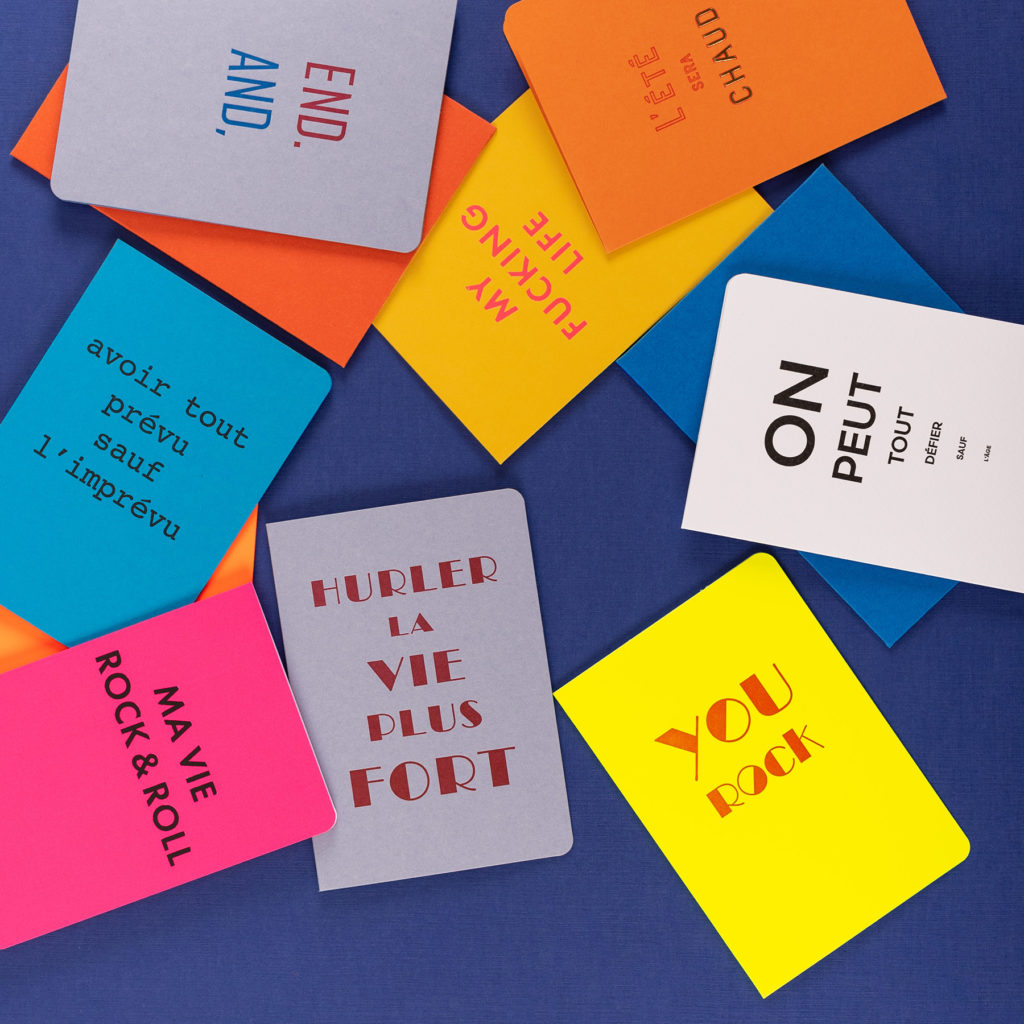
Gone is the mass-produced “beach photo” card, churned out by the thousands in identical copies. In the hands of le typographe, the artisanal postcard starts from scratch, grounded in a commitment to solid craftsmanship:
- letterpress printing on Heidelberg presses—produced in small batches—featuring the relief and texture characteristic of this process
- 300gsm paper, selected for its thickness, substance, and tactile quality
- a matching envelope, hand-glued in the Brussels workshop
The card itself is just as important as the message written on it. It is no longer merely a medium; it becomes an object one wants to keep, even before a single word has been written on it.
A card doesn’t necessarily have to be sent
The use of the postcard has expanded. It is no longer necessarily a postcard dropped into a mailbox with a stamp. It can take various forms:
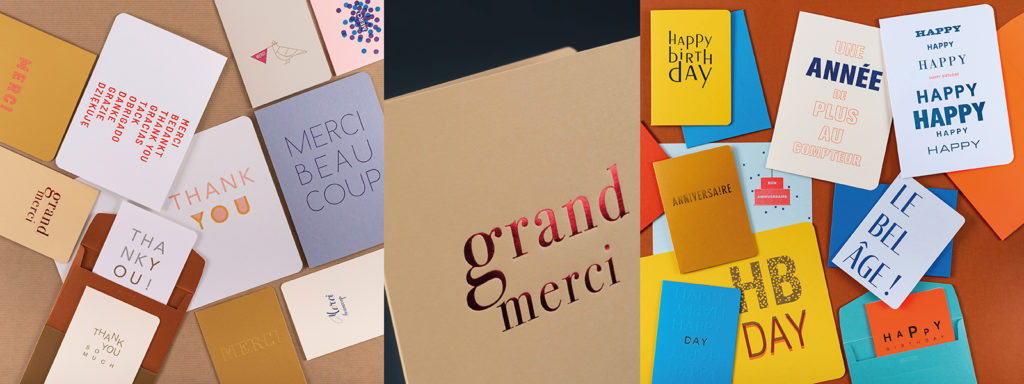
- The birthday card accompanying a gift—from a mini card for a short note to an A5 card for group or family gifts
- The message card, given on its own to display on the fridge or as wall decor
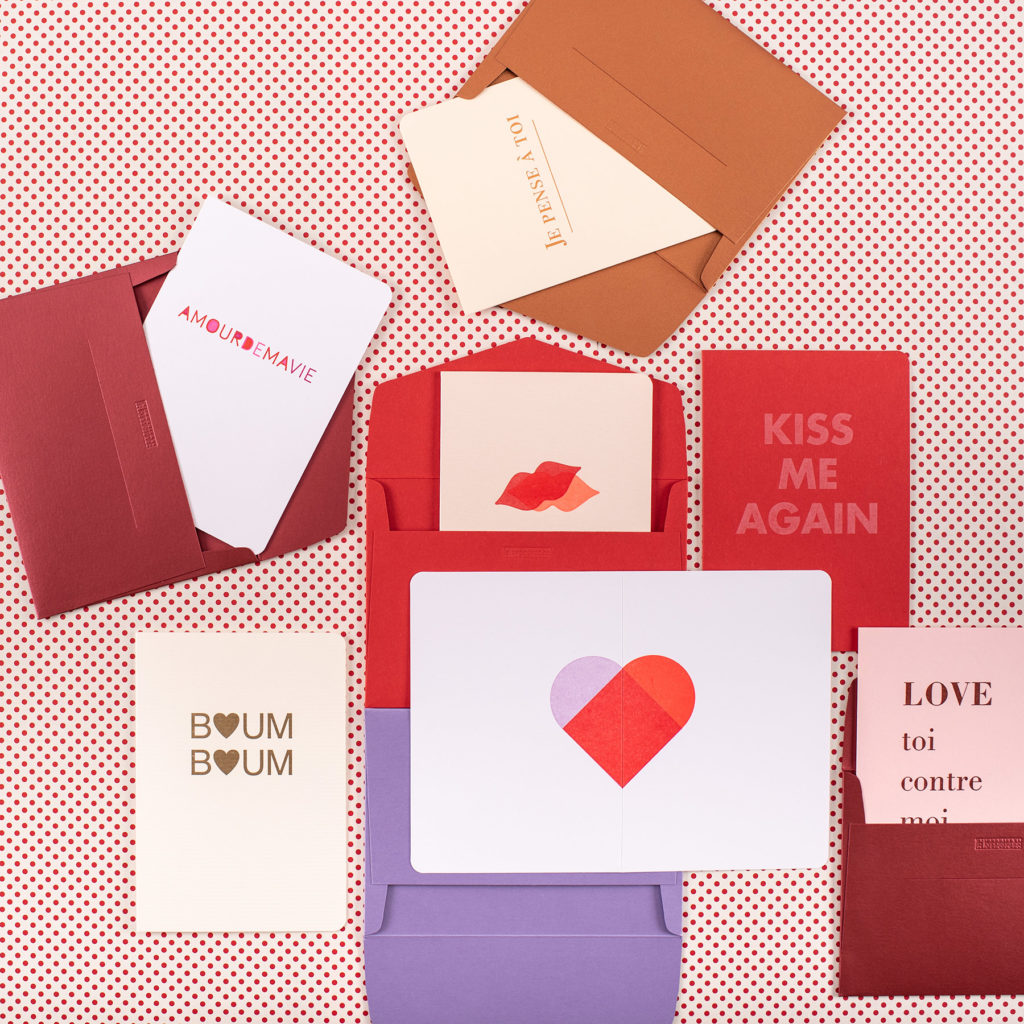
- The love card, left on a pillow as a surprise
- The birth, wedding, or congratulatory card, tucked in with a gift
The handcrafted card is therefore no longer merely a postal item: it is also a gift, a decorative object, and a thoughtful gesture.
The handcrafted postcard designed for every message
At le typographe’s, you choose your handcrafted postcard:
- By occasion: Love, Birthday, Thank You, General Messages, Condolences, Christmas and New Year.
- By personal favorite: an icon, a drawing, or a meaningful message.
- By format: A6 (10.5 × 15 cm)—the classic size that mails with a standard stamp despite the paper weight; A5 (15 × 21 cm)—more generous, ideal for a message that goes beyond the usual scope; or the mini—for a small, thoughtful, and understated gesture.
- By color and paper: varied shades, unique color combinations, and distinctive textures.
Receive a postcard today
A postcard in the mailbox comes as a pleasant surprise; its rarity restores its full value. The act itself—choosing it, writing it, stamping it—tells a story that a phone message never could. Sending a postcard requires time, intention, and a deliberate action. And unlike a message that vanishes into a conversation thread, a card is kept as a memento. Whether pinned to a wall, held by a magnet on the fridge, or tucked away in a drawer, it remains a tangible keepsake long after it has been read.
Conclusion
Thanks to le typographe, the artisanal postcard has found a new reason for being: that of a handmade object, carefully printed and designed for every occasion and every message.
Want to discover the full range? Browse our stationery collections online, or come and explore them in person at our studio in Brussels, or at our shops in Nantes, Paris, or Munich.
Follow us on social media: Instagram, Facebook, LinkedIn, Viméo
